Monday, March 28, 2011

HAMOG


Hinay-hinay nang hingbiya ang ngit-ngit
Ug gihagbong ang iyang mga bituon
Ngadto sa kayutaan
Ang uban gisalo sa mga dahon
Naglatay-latay  sa iyang tumoyan
Natagak ug gisabligan ang ugang yuta
Uban sa pagsidlak sa bag-ong adlaw

Tuesday, March 22, 2011

More of being just a thing.


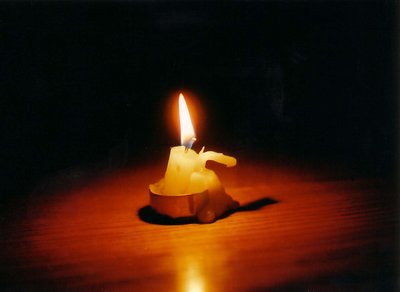
I am imagining myself writing this in a powerless home. My fountain pen replaced my computer and my candles replaced my lamps. I am tired. I am hungry. I am cold. I have never felt like less of a philosopher, yet, I have never felt like less of a person. As I look out the window and see other homes with power, their televisions tirelessly switched ON, I feel all the more alone, hopeless and depressed. How can it be that a brief outrage of a modern convenience has distanced me so far from my community, and the person that I thought I was?

I am a person with few needs and even fewer desires: a comfortable bed, something to eat and drink, and someone to talk to, that’s it, no more and no less. My personhood is intimately connected with my needs and desires: not having a way to fulfill them has, in some sense, made me less of a person. I feel alienated from my “species being”, yet, I know that I am not alone in my plight; the thousands of other individuals without power are, without doubt, experiencing similar feelings, but perhaps most paradoxically, the very people in whom our thirst for modernity is embodied, are themselves the most obvious victims of their resources. Their lives of movie watching, internet surfing and cellphone texting have not been interrupted, their fetishism for commodities has remained unchallenged at the same time that mine has been destroyed. For what mere commodity is mere desirable than warmth when you are freezing, company when you are alone, or bread when you are hungry? Would an iPOD be successful in nourishing my soul in its present, shattered state? Would a Ferrari 355? Would anything other than its most basic need?

My experience has demonstrated to me the reification of commodities is deadly to the intellectual life of the individual and the community of which he is part. When we lust after commodities, we ignore the interpersonal relations upon which the existence of commodities is dependent. Our existence as human beings, in need of meaningful relations with persons and not things is destroyed by our desire for nourishment in commodities, rather than souls. A life in pursuit of things does nothing other than transform oneself into a mere “thing”.
If I may be permitted the liberty, I should like to compare my situation in modernity to that which Karl Marx was analyzing in the 19th-mid century; for in my view, they are wholly analogous.

The proletariat must toil to procure the bare means of his life. He must prostitute himself to the highest bidder to ensure his stomach is filled with food. The bourgeoisie capitalist lives content in the knowledge that his life of luxury comes from the mass exploitation of his fellow human beings. In both cases, the individuals and the classes are alienated from the very basis upon which human existence is dependent. For man is a species being, his life in its fullest and most complete sense can only be realized in meaningful and mutually beneficial relations with his fellow human beings. The individual exists for society just as much as society exists for individual. To ignore this relationship is to disparage the human condition to a relationship of self-interest and usurpation; it is to perpetuate the already pervasive cultural fetishism of commodities, it is to strip from the individual the last vestiges of his species being. To deny this relationship to others is to commit social homicide.

Tuesday, February 22, 2011

ALON

Gaano man kahigpit 
ang yakap ng mga buhangin 
ay naaanod pa rin ito
ng marahas na pagsagupa ng alon… 
Nilulunod  ito hanggang maging
patag ang bundok na nais 
itayo ng matandang hangal… 
Kasabay ang pagguho 
ng tagumpay na nais niyang
makamit. Iniluluklok ito
hanggang sa kaibuturan 
ng kanyang lalim 
upang hindi na ito gumalaw… 

Sunday, February 13, 2011

PAGHAHANAP.

      At dahil pinilit kong magdiwang ng ARAW ng mga PUSO noong 14 Pebrero, pinili kong sumama sa aking mga kaibigan sa Dumaguete. Ang sabi nga nila, para maiba naman ang tema ng VALENTINES- Pagmamahal sa Sarili muna ang dapat atupagin.

    Huli kong napuntahan ang Dumaguete noong 2008. Pero iyon ay isang simpleng Academic Trip lamang. Walang pagliliwaliw at walang Good time. Pero sa pagpunta namin ngayon, ay isang bagay lang ang inisip ko:
ang mag-ala JULIA ROBERTS! (Eat, Pray, Love!) Alam mo na?

 Hanging bridge: isa sa mga atraksyon ng FOREST PARK.

 Ang LOGHOUSE- ang bahay na hinati sa dalawa. Ang kaliwa ay ang BAHAY CHAMPACA at BAHAY NARRA sa kanan kung saan kami natulog.


Tabing Ilog Cast

"Pan de Leche."- di ko akalain na sa Valencia,Dumaguete matatagpuan ang pinakamasarap na tinapay. Ito daw ay gawa sa COCONUT Oil sa halip na lard. Naubos ko ito lahat.

Ang sabi nila, ang kayamanan ng isang lugar ay matatagpuan sa PALENGKE. 

 Malaswang Pangalan ng Tindahan.

Si Chardee at ang kayamanang aming nahanap.-Isang VINTAGE Store.

 PUTO MAYA

    At kung ang tanong mo ay kung tunay ko nga bang nahanap ang aking sarili doon, ang sagot ko ay, HINDI!  O sabihin na nating MEDYO.

     Ang pagkilala sa sarili ay isang proseso. Ang parte ng aking pagkatao. Ang aking kalahati. Ang salamin ng aking kaluluwa- lahat ng ito ay hindi mo makikilala sa isang tagpuan lamang.
Paunti-unti.Pahinay-hinay.

      Ang pagkilala sa sarili ay tulad ng pagkilala sa ibang tao. Pero, ito ay hindi isang “HI, MY NAME is JOHN, and you are?” Ito ay parang pag-usisa ng taong nangliligaw. Parang pag-aaral ng Final Exam na kailangang balikan mula umpisa. Paghahanap ng bagay na alam mong hindi mo na makikita.

Tama nga si Mareng Elizabeth Gilbert

”Your treasure – your perfection – is within you already. But to claim it, you must leave the busy commotion of the mind and abandon the desires of the ego and enter into the silence of the heart.”

-Excerpt from Eat, Pray, Love: One Woman’s Search for Everything Across Italy, India and Indonesia.

Saturday, January 15, 2011

The Religious Dimension

Questions such as: Whether there is a God? Whether we continue to exist after death? And whether any God is active in human history? – are but human need that probably exists for some sort of salvation, liberation, pacification, or whatever it may be called. It seems to be among the main foundations of all religion. This may also be a basic human need for mystery, wonder, fear of the sacred, awe in the presence of the completely different, or emotional response to the “numinous,” which is discussed in The Idea of the Holy by Rudolf Otto and The Sacred and the Profane by Mircea Eliade.

God is uniquely other than everything in creation. God’s distinctness from the being of the world has been implied in previous discussions of God’s attributes metaphysically, intellectually, ethically, emotionally, and existentially. While God’s being is eternal, the world is temporal. God’s knowledge is total and human knowledge is incomplete. God’s character is holy, humanity’s character fallen and sinful. God’s desires are consistently against evil yet long-suffering and compassionate; human desires fluctuate inconsistently and often intermingle evil with the good. God’s energy is untiring and inexhaustible; the world’s energy is subject to depletion. Hence God is over and above persons in the world in all these respects. GOD IS TRANSCENDENT.

God exists, but cannot be known. It is, however, the fact that God cannot be known that is the one means humanity has of knowing that God exists. This sounds paradoxical, but it is not.

Ang Banal (Sacred) ay nagpapakita, ngunit ang nagpapakita ay sabay nagtatago. Hindi lahat sa Kanya nakikita — sapagkat kung nakita lahat, wala na tayong hahanapin. Hindi lahat sa Kanya nakikilala — kung kilala na natin, wala nang saysay na kilalanin pa siya.
– Prof. Jeremy Eliab

The severe limitations inherent in human knowledge, language and reasoning make the demonstration of God’s existence impossible. No human term–not “universal,” or “omnipotent,” or “infinite,” or “omniscient,” or even “other”–is adequate to the task of describing God’s existence. These terms hint at humanity’s recognition of the essential unknowable-ness of God. Each of them describes some quality that cannot be realized by a human being and can only be a quality of some existence that is not human. Yet these terms fail to achieve their goal of describing such an existence because they themselves exist, inevitably, in relation to human experience.

While God is unknowable, the desire to know God can be shown to exist. While this desire is, admittedly, a human impulse, it is also an impulse that is not related to the limited range of human existence. There are other, seemingly unrealizable, goals to which humanity aspires. But love, peace, justice, knowledge and others like them are clearly related to the limited human sphere. The desire to know God might, in order to distinguish it from these desires, be called a transcendent impulse. It is only the existence of this impulse that even hints at the existence of God.

However, others might say that God is not anymore needed in this contemporary time, that he has caused the people’s live into the pit of disaster, that God is dead! For the majority of Europeans and the most highly educated around the world, this is true. It is much truer than when Friedrich Nietzsche wrote that in his article of the Madman.

From these claims, the question therefore arises as to whether we were right to dispose the idea of God. As it is natural in societies that are now animated to the highest degree by science, the answers we hear most commonly are those of the scientist; NO, they say, all that matters is what can be proven and the useful technology that this gives us. Has not religion held back science and technology in the past? Did it not lead to millions of lives sacrificed on altars of ignorance and stupidity, in countless wars and oppressions? Does it not encourage us to cease to think and explore the world in positive ways and devote ourselves to mindless worship?

God was “discovered” by man through the faculty of thought and destroyed by the same method; the question of evidence and proof is wholly irrelevant here, just as it is to our notion of beauty or love. A scientist can no more destroy the validity of God as an idea than he can demonstrate God’s existence as a tangible thing in the laboratory. God is an idea, not a thing, whereas science deals in things. As our mastery of things has progressed, we have shed our belief in intangible ideas such as our belief in God because we think we no longer need them. The spiritual realm of the human mind still exists and is still there to be tapped; it still gives comfort to millions.
The answer to all of these questions is that yes, the idea of God, systemized into religion, can do these things. But it is a fallacy to think that the idea of God or of gods has been merely a tool of oppression and nothing else, and that it has always and everywhere held back progress and crushed the dignity of man and left only death in its wake. Clearly, it has offered comfort to the most needy, inspiration to the most brilliant artists, and the will to continue to the most oppressed. It has even done this for entire peoples.

It does not seem irrelevant to point out that the idea of God has arisen in almost every human society that there has ever been and that it is clearly in some way innate in man, even if only as a protection against his ignorance. It is a commonplace of the modern man to say that he has no need of God because he has dispelled his ignorance by science. But this ignores the vast questions on which science is not competent to answer, among which lie the most important facing us – how to construct a just society; how to live sustainably with nature; and what our societies should value and reward.

The point is not that God is Great. It is not that we should leap back into our old superstitions or beliefs, and dismiss the enormous progress we have made in many areas in the last century. It is that life is about great choices such as these, monumental questions that underpin our civilization and ultimately determine its fate. The conditions of life might include error, might include things that are not scientific truths that can be demonstrated in a laboratory; in fact, Nietzsche was wrong to even include the word “might” in that sentence. The concept of God was one such possible way of providing an answer to these questions, but we have killed Him. He is not coming back. What bodes worst for our civilization is that after killing Him, we have forgotten how to even think about these questions, or the reason why it is important to think about them at all.

God is a living, personal Spirit worthy of whole-soul adoration and trust, separate from the world, and yet continuously active in the world. Unlimited by space, God nevertheless created and sustains the cosmos, scientific laws, geographical and political boundaries. Beyond time, God nevertheless actively relates to time, to each human life, home, city, nation, and to human history in general. Transcendent to discursive knowledge and conceptual truth, God nevertheless intelligently relates to objective validity, logical consistency, coherence and clarity, as well as subjective authenticity and existential integrity. Unlimited by a body, God is nevertheless providentially related to physical power in nature and society, industrially, socially, and politically. God knows and judges human stewardship in the use of all the earth’s energy resources. God transcends every attempt to achieve justice in the world, but righteously relates to every good endeavor of his creatures personally, economically, socially, academically, religiously, and politically. Although free from unworthy and uncontrolled emotions, God is caringly related to the poor, the unfortunate, the lonely, the sorrowing, the sick, the victims of prejudice, injustice, anxiety, and despair. Beyond all the apparent meaninglessness and purposelessness of human existence, God personally gives significance to the most insignificant life.
-Pilosopong Pepe

Saturday, January 1, 2011

SIMULA


Ang sabi ng kalendaryong Intsik- ang 2011 ay panahon ng KUNEHO. Ito ang ika-apat sa dalawampung tanda ng Chinese Zodiac at ang eksaktong tanda ng taon ng aking kapanganakan.

SUWERTE o MALAS kaya ako sa taong ito? Ewan. Hindi ko alam. Hindi naman ako intsik (ni katiting na lahi) para maniwala. Basta ang alam ko ay hindi naisusulat sa palad ang kapalaran. Hindi ito nakaguhit sa bituin. Hindi rin ito kailan man masisilip sa bolang kristal. Ang kapalaran na gusto mong tahakin ay nakabase sa “pagpipili”- pagpili ng tamang daan, at pagpili ng tamang desisyon.

Aaminin ko, ang nakaraang taon ay naging sobrang mapagbigay sa akin. Nagmula sa pagbiyaya ng mga bagong kaibigan, bagong pamilya sa trabaho, hanggang sa paglipat ng bagong tirahan. Hindi ko alam kung magpapatuloy ang biyayang ito. Pero nagpapasalamat ako sa lahat dahil binigyan nito ng kahulugan ang pananaw ko sa aking sarili at sa buhay mayroon ang tao.

Ngayon ay panahon ng kuneho. Sasabay ako sa kanyang bilis. Makikilundag ako sa kanyang pagbabago. At tulad ng kanyang mabusising mata at malaking tenga, ay magiging mapagmatyag ako sa anu mang galaw at ingay ng hinaharap.

At itong maliit na espasyong ito ay magiging talaan ng lahat ng aking karanasan at aral na natutunan sa bagong panahon.

Maligayang Pagbabasa!

-Pilosopong Pepe